

To help celebrate VTN’s 20th anniversary of advancing telehealth across the Commonwealth, we’re beginning a new blog series in which we speak with founding board members to learn more about VTN’s inception as well as pivotal moments in the organization’s history.
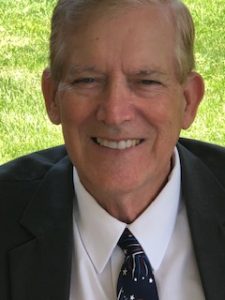
This month, we spoke with Howard Chapman, Jr., Director of Programs and Development at Tri-Area Community Health and VTN’s Board Treasurer. When VTN was established, Howard was the Executive Director at Saltville Medical Center and worked collaboratively with several organizations to coordinate care and address the health care issues for residents of Southwest Virginia.
Was there a need for an organization dedicated to telehealth when VTN was established?
At the time that VTN was created, there hadn’t been a concerted effort toward telemedicine. Things started to change in 2000, when a representative from Virginia Community Health Care Association wanted to connect UVA with community health centers in Southwest Virginia for specialty care referrals via telehealth. The partnership with UVA allowed us to connect patients to 24 separate specialty providers.
Travel is one of the biggest challenges we have in our region. And if patients have to travel another hour to see specialists, that’s even more of a challenge. During the referral program, patients would occasionally have to go see the doctor in person, but our staff could conduct most of the patients’ workups from our office.
Working alongside UVA to connect patients virtually was an example of how telehealth could help increase access to care for people in rural communities. It was also how I met Dr. Karen Rheuban, another founding member and current VTN Board President. In 2003, she got me to speak on a panel before the Department of Agriculture and Congress advocating for the Distance and Telemedicine Grant Program to be awarded to rural schools and health care providers so they could invest in telecommunications facilities.
What are some pivotal moments for telehealth in Virginia over the last 20 years?
During the pandemic, Tri-Area Community Health participated in a program that demonstrated the effectiveness that remote patient monitoring could have. We worked with Dr. Richard Stanton, an endocrinologist with UVA. His goal was to monitor diabetic patients remotely, and he had some amazing results. On average, he was able to lower patients’ hemoglobin A1C by two points over a 6-month period. In 2021, the National Association of Community Health Centers published an article on this study. As part of that work, Brandon Carr, Chairman of the Federal Communications Commission, decided that he wanted to announce the $100 million broadband expansion in the communities where they were making a difference, not from his office in Washington D.C. He made the announcement from Laurel Fork, located on top of the Blue Ridge Mountains.
What will be the focus of VTN over the next 20 years?
I think there’s a lot of potential with wearable technology like watches and rings that monitor blood pressure and other vitals. Monitoring a patient from home can help increase access to care. We’re seeing a lot of virtual visits through urgent care centers and medical practices in rural communities. Much of this progress is directly related to the advocacy work of VTN.
Why is continued effort toward expanding access to telemedicine important?
VTN has served as the Commonwealth’s technical advisor on telemedicine, and to some degree, on the national level. While there are still issues around connectivity in parts of the state and country, it’s amazing how far we’ve come in increasing access to telehealth in rural communities. I think that investing in connectivity out here and in other rural areas would have gone to the wayside if it had not been for someone constantly putting it before our policymakers and state leaders like VTN has over the last 20 years.